

Last-Minute Tax Saving Tips 2026: Save ₹1.5 Lakh Before 31 March
As the financial year 2025–26 comes to an end, taxpayers across India are rushing to complete their tax planning before the deadline of 31 March 2026. If you have not yet optimized your taxes, you may end up paying more than necessary.
The Income Tax Act provides several legal ways to reduce your tax liability, especially under Section 80C and other deductions. Even at the last minute, you can still take advantage of these provisions and save up to ₹1.5 lakh or more.
This comprehensive guide will help you understand the best last-minute tax saving strategies, investment options, common mistakes to avoid, and smart planning tips for both the current and upcoming financial year.
Why Tax Saving Before 31 March is Crucial
The deadline of 31 March marks the end of the financial year, and any tax-saving investments must be completed before this date to be eligible for deductions in FY 2025–26.
Failing to act before the deadline can result in:
- Higher taxable income
- Increased tax outflow
- Missed investment opportunities
- Poor financial planning
On the other hand, timely tax planning not only reduces your tax burden but also helps you build long-term wealth.
Understanding Section 80C: The Foundation of Tax Saving
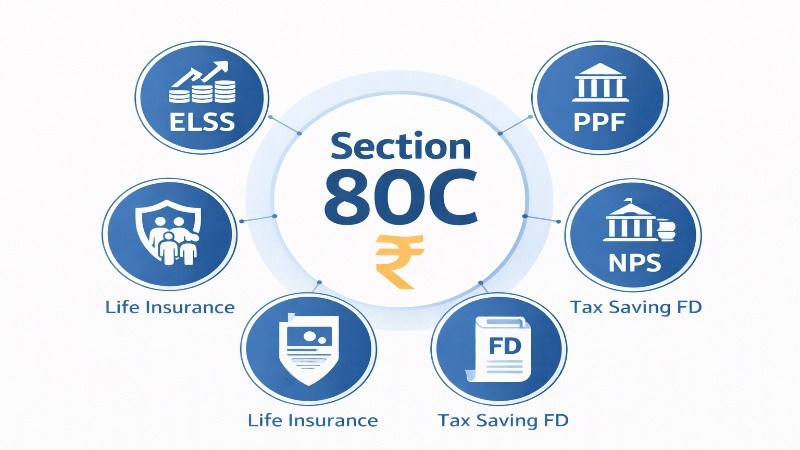
Section 80C is one of the most popular and widely used sections of the Income Tax Act for tax saving.
Maximum Deduction Limit
You can claim deductions up to ₹1,50,000 per financial year.
Eligible Investments and Expenses
- Equity Linked Savings Scheme (ELSS)
- Public Provident Fund (PPF)
- Employees’ Provident Fund (EPF)
- Life Insurance Premium
- Tax-saving Fixed Deposits
- National Savings Certificate (NSC)
- Sukanya Samriddhi Yojana
- Home loan principal repayment
- Tuition fees for children
Understanding these options allows you to choose the most suitable investment based on your financial goals.
Best Last-Minute Tax Saving Investment Options in Detailed

1. ELSS (Equity Linked Savings Scheme)
ELSS mutual funds are among the most preferred tax-saving options due to their potential for higher returns.
Key Features:
- Lock-in period: 3 years (shortest among 80C options)
- Market-linked returns
- Tax deduction under Section 80C
Advantages:
- Higher return potential compared to traditional options
- Ideal for long-term wealth creation
- Suitable for investors with moderate to high risk appetite
2. Public Provident Fund (PPF)
PPF is a government-backed savings scheme known for safety and tax benefits.
Key Features:
- Lock-in period: 15 years
- Interest rate set by the government
- Completely tax-free returns
Advantages:
- Safe and stable investment
- Suitable for conservative investors
- Ideal for retirement planning
3. National Pension System (NPS)
NPS is a long-term retirement-focused investment option that offers additional tax benefits.
Key Features:
- Additional deduction of ₹50,000 under Section 80CCD(1B)
- Mix of equity and debt investments
- Long-term wealth accumulation
Advantages:
- Extra tax benefit beyond 80C
- Helps build a retirement corpus
- Cost-effective investment option
4. Tax-Saving Fixed Deposits
Tax-saving FDs are offered by banks with a fixed lock-in period.
Key Features:
- Lock-in period: 5 years
- Fixed and predictable returns
- Eligible under Section 80C
Advantages:
- Low risk
- Guaranteed returns
- Suitable for conservative investors
5. Life Insurance Premium
Life insurance not only provides financial security but also offers tax benefits.
Key Features:
- Premium qualifies for deduction under Section 80C
- Provides financial protection to family
Advantages:
- Dual benefit of protection and tax saving
- Essential for financial planning
Additional Tax Saving Options Beyond Section 80C

To maximize your tax savings, you should also consider deductions beyond Section 80C.
Section 80D – Health Insurance
- Deduction for medical insurance premiums
- Up to ₹25,000 (₹50,000 for senior citizens)
Section 24 – Home Loan Interest
- Deduction up to ₹2 lakh on home loan interest
Section 80E – Education Loan Interest
- No upper limit on interest deduction
Section 80G – Donations
- Deduction for eligible charitable donations
Latest Trends in Tax Saving (March 2026)
In recent years, investor preferences have shifted significantly:
- Increasing interest in ELSS due to higher return potential
- Growing adoption of NPS for retirement planning
- Declining preference for traditional fixed deposits
- Rising awareness about diversified investment strategies
These trends highlight the importance of choosing investments that align with both tax saving and wealth creation.
Step-by-Step Last-Minute Tax Saving Strategy
If you are starting late, follow this structured approach:
Step 1: Calculate Taxable Income
Determine your total income and applicable tax slab.
Step 2: Identify Unused Deduction Limit
Check how much of the ₹1.5 lakh limit under Section 80C is still unused.
Step 3: Choose Suitable Investments
Select options based on:
- Risk tolerance
- Investment horizon
- Financial goals
Step 4: Complete Investments Before Deadline
Ensure all transactions are completed before 31 March 2026.
Step 5: Maintain Documentation
Keep proofs such as receipts, statements, and certificates for tax filing.
Common Mistakes to Avoid
Many taxpayers make errors while rushing to save tax at the last minute. Avoid these common mistakes:
- Investing without understanding the product
- Choosing investments solely for tax benefits
- Ignoring long-term financial goals
- Delaying until the final day
- Failing to keep proper documentation
Smart Tax Planning Tips for FY 2026–27
Instead of waiting until the end of the financial year, adopt a proactive approach:
- Start tax planning at the beginning of the year
- Invest systematically (monthly SIPs)
- Diversify across asset classes
- Align tax saving with financial goals
- Review your portfolio regularly
Related Articles
How to Manage Monthly Salary Effectively: A Practical Guide
Best Investment Options in India for Beginners (2026 Guide)
Union Budget 2026: Key Announcements and Impact on the Indian Economy
Conclusion
Tax saving should not be viewed as a last-minute activity but as an integral part of financial planning. However, even if you have delayed your tax planning this year, there is still time to take corrective action.
By making informed investment decisions before 31 March 2026, you can significantly reduce your tax liability while building a strong financial foundation for the future. Act now to make the most of available deductions and secure your financial well-being.
For more in-depth financial insights, tax-saving strategies, and investment guidance, stay connected with Arthneeti Global and make smarter financial decisions.
Frequently Asked Questions
1. What is the last date to save tax for FY 2025–26?
The last date to make tax-saving investments for FY 2025–26 is 31 March 2026. Investments made after this date will be considered for the next financial year.
2. How much tax can I save under Section 80C?
You can claim a maximum deduction of ₹1.5 lakh per year under Section 80C by investing in eligible instruments like ELSS, PPF, EPF, and tax-saving fixed deposits.
3. What are the best last-minute tax saving options in India?
Some of the best last-minute tax saving options include:
- ELSS (Equity Linked Savings Scheme)
- PPF (Public Provident Fund)
- NPS (National Pension System)
- Tax-saving Fixed Deposits
- Life insurance premiums
4. Can I invest in NPS for additional tax benefits?
Yes, NPS allows an additional deduction of ₹50,000 under Section 80CCD(1B), over and above the ₹1.5 lakh limit of Section 80C.
5. Is ELSS better than PPF for tax saving?
ELSS offers higher return potential with a shorter lock-in period of 3 years, while PPF is safer with guaranteed returns and a 15-year lock-in. The choice depends on your risk appetite and financial goals.
6. What happens if I don’t invest before 31 March?
If you miss the 31 March deadline, you will not be able to claim tax deductions for that financial year, which may result in a higher tax liability.
7. Can I claim tax deductions beyond Section 80C?
Yes, you can claim additional deductions under sections like:
- 80D (health insurance)
- 24 (home loan interest)
- 80E (education loan interest)
- 80G (donations)
8. Which tax saving option is best for beginners?
ELSS mutual funds are often considered the best for beginners due to their potential for higher returns, professional management, and relatively short lock-in period.
9. Is it safe to do tax planning at the last minute?
While it is possible, last-minute tax planning can lead to poor investment choices. It is always better to plan your taxes at the beginning of the financial year.
Disclaimer:
This article is for informational and educational purposes only and should not be considered financial or tax advice. Readers are advised to consult a qualified financial advisor or tax professional before making any investment or tax-related decisions.

Pingback: Best Tax Saving Investments in India 2026: ELSS vs PPF, NPS