
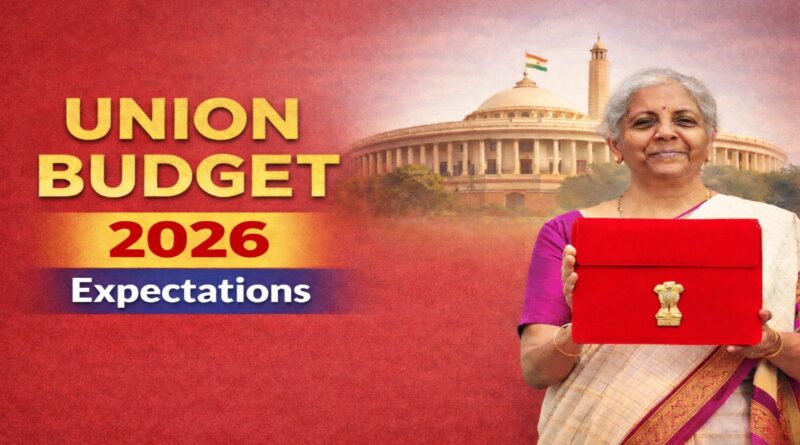
Budget 2026 Expectations: What Middle Class, MSMEs and Startups Are Hoping For
As India approaches the Union Budget 2026, expectations are rising across households, small businesses, and the startup ecosystem. With inflation pressures, job market challenges, and global economic uncertainty, this budget is seen as a crucial policy moment for restoring confidence and accelerating growth.
Unlike headline-driven coverage, what truly matters is how the budget addresses everyday financial stress, business sustainability, and long-term economic stability. Let’s break down the key expectations from Budget 2026 across major sections of the economy.
Why Budget 2026 Is Economically Important
India is currently navigating a phase where consumption growth has moderated, private investment is cautious, and global trade remains uncertain. While infrastructure spending has remained strong, demand from the middle class and small enterprises needs policy support.
Budget 2026 is expected to focus on:
- Boosting disposable income
- Improving ease of doing business for MSMEs
- Encouraging private investment
- Supporting employment generation
Together, these factors play a major role in sustaining long-term economic momentum.
What the Middle Class Expects From Budget 2026
The middle class remains the backbone of consumption in the Indian economy, and Budget 2026 expectations for the middle class are focused on easing financial pressure from rising living costs, education expenses, healthcare bills, and housing EMIs.
1. Tax Relief and Higher Deductions: Key Budget 2026 Expectations for the Middle Class
One of the biggest Budget 2026 expectations is relief in personal income tax. Many taxpayers hoping for:
- Higher standard deduction
- Increased limits under Section 80C of the Income Tax Act.
- Better tax benefits on home loans and insurance
Simplification of tax slabs is also expected to improve clarity and compliance.
2. Support for Housing and Home Buyers
Affordable housing incentives have played a key role in urban development. Expectations include:
- Extended tax benefits for first-time home buyers
- Increased allocation for housing schemes
- Interest subsidies for affordable housing segments
This would not only help families but also boost employment in construction and allied sectors.
Government schemes like Pradhan Mantri Awas Yojana (PMAY) have earlier helped first-time buyers with affordable housing and interest support.
3. Lower Indirect Taxes on Essentials
Although GST is not directly part of the Union Budget, pricing of fuel and essential services remains a concern. Relief in fuel-related taxes could indirectly reduce transportation and food costs, helping control inflation.

MSME Expectations from Budget 2026
Micro, Small and Medium Enterprises (MSMEs) are India’s largest employment generators. However, access to credit, compliance burden, and delayed payments remain major challenges.
1. Easier and Cheaper Credit Access
Small businesses expect:
- Expansion of credit guarantee schemes
- Lower interest subvention on loans
- Faster approval mechanisms through digital platforms
Affordable working capital is critical for business continuity and expansion.
2. Faster Government Payment Cycles
Delayed payments from large corporations and government bodies severely impact MSME cash flows. Budget 2026 expectations include:
- Stricter enforcement of payment timelines
- Automated invoice tracking systems
- Higher penalties for delayed settlements
This would significantly reduce financial stress among small enterprises.
Cash flow stress is also connected to rising logistics and platform costs, as discussed in our analysis of how India’s gig economy platforms affect small businesses.
3. Incentives for Technology Adoption
Digital tools can improve productivity and compliance. MSMEs are hoping for:
- Subsidies for ERP and accounting software
- Support for e-commerce onboarding
- Cybersecurity and data protection assistance
Such initiatives could help small firms compete in national and global markets.
Startup Ecosystem Expectations from Budget 2026
India’s startup sector has matured, but funding has slowed in recent years. Many startups are now focusing on profitability rather than aggressive expansion.
1. Tax Relief on ESOPs
Employee Stock Ownership Plans (ESOPs) are important for attracting talent. Startups expect:
- Deferred tax payments until actual sale
- Simplified valuation rules
This would help startups compete with large corporates for skilled professionals.
2. Capital Gains and Investment Incentives
To revive funding momentum, expectations include:
- Tax incentives for angel investors
- Reduced capital gains tax for long-term startup investments
- Expansion of government-backed fund-of-funds programs
These measures can improve capital availability for early-stage companies.
3. Regulatory Simplification
Startups want fewer compliance hurdles, especially in:
- Labour laws
- Cross-border transactions
- Data regulations
Simpler regulations can reduce legal costs and improve business focus.

Government Spending Priorities in Budget 2026
Apart from tax measures, government expenditure plays a huge role in shaping economic growth.
Key Areas Likely to Get next focus:
- Infrastructure development
- Renewable energy and climate projects
- Skill development programs
- Healthcare and education
Public investment in these sectors can stimulate private investment and improve long-term productivity.
Will Budget 2026 Focus More on Growth or Fiscal Discipline?
One of the biggest policy balancing acts is between stimulating growth and maintaining fiscal discipline. With rising public debt globally, governments are cautious about excessive spending.
Budget 2026 is expected to follow a balanced path by:
- Continuing capital expenditure
- Limiting revenue expenditure growth
- Encouraging private sector participation
This strategy aims to sustain growth without destabilizing fiscal health.
Final Thoughts: Why Expectations Matter More Than Announcements
Budgets are not just about headline numbers; they shape economic confidence. For households, small businesses, and entrepreneurs, policies that improve stability and predictability matter more than one-time benefits.
If Budget 2026 can strengthen consumption, support business resilience, and encourage investment, it could set a strong foundation for India’s medium-term economic growth. However, the true impact will depend not only on policy announcements but also on effective implementation at the ground level which remains central to Budget 2026 expectations for the middle class and MSMEs.

Pingback: India–EU Trade Deal Explained: Current Status & Impact
Pingback: Impact of AI on Jobs in India 2026: Opportunities and Risks
Pingback: Union Budget 2026: Key Highlights & Impact on Indian Economy