
New Banking Rules from April 1, 2026: What Every Account Holder Must Know
If you have a savings account in any bank, these updates are crucial for you. From April 1, 2026, significant changes have been implemented in India’s banking and financial system. These reforms, introduced by regulatory authorities Reserve Bank of India, which directly impact how you withdraw cash, manage transactions, report income, and handle digital fraud.
Ignoring these updates could lead to unnecessary charges, compliance issues, or financial loss. Here is a detailed breakdown of the eight major banking and financial changes in 2026 and what they mean for you.
1. UPI ATM Withdrawals Now Count in Free Limit
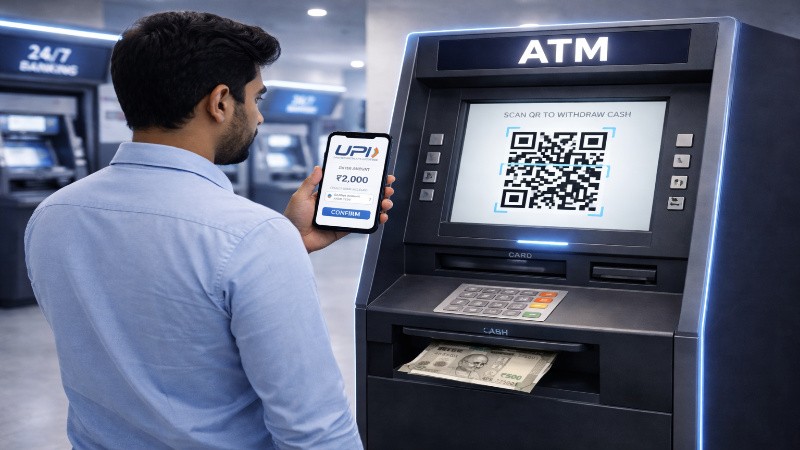
Earlier, withdrawing cash via ATM card and UPI (QR-based withdrawal) were treated separately. Now, both are counted together.
What Has Changed
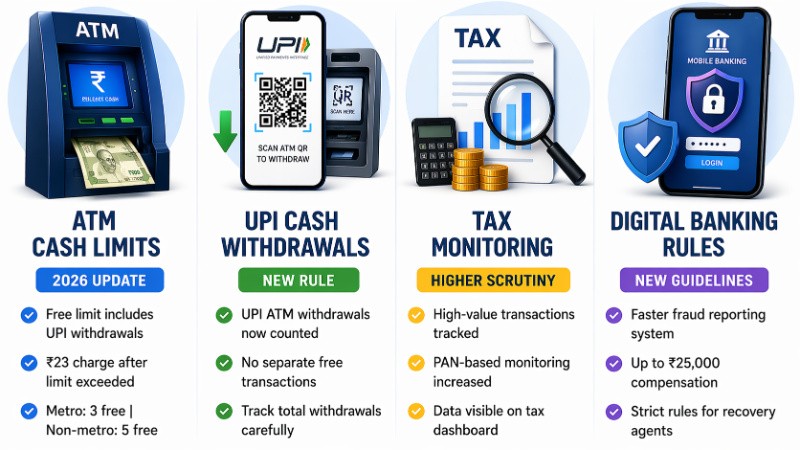
UPI-based ATM withdrawals are included in your monthly free transaction limit.
Example:
3 ATM withdrawals (card)
2 UPI withdrawals
Total 5 free transactions (limit reached)
After exceeding the limit:
₹23 per transaction plus GST will be charged
Free Withdrawal Limits
- Metro cities: 3 free withdrawals (other bank ATMs)
- Non-metro cities: 5 free withdrawals
Impact – UPI cash withdrawal is no longer free. You must track total withdrawals carefully.
2. Stricter Monitoring of High-Value Transactions
From 2026 onwards, financial tracking has become more advanced and integrated by Income Tax Department.
Key Changes
- All high-value transactions will be closely tracked
- Data will directly reflect on the Income Tax dashboard
- PAN-based monitoring has become more aggressive
Impact – Any mismatch between income and spending can trigger scrutiny.
Since tax monitoring is increasing, it becomes important to choose the right tax-saving options. You can explore best tax saving investments in India 2026.
3. Social Media vs Financial Data Tracking
Authorities are now aligning your digital presence with your financial declarations.
What Is Being Compared
- Lifestyle shown on social media
- Declared income in ITR
Impact – If your lifestyle, such as travel or luxury spending, does not match your reported income, it may raise red flags.
4. Changes in ULIP Taxation
A major shift has occurred in ULIP (Unit Linked Insurance Plans).
Key Changes
- Certain ULIPs no longer qualify for tax exemption under Section 10(10D)
- They are now treated as capital assets
Tax Implications
- Holding period greater than one year
- Taxed like equity mutual funds
- 12.5 percent Long-Term Capital Gains
Impact – ULIPs are no longer purely tax-free instruments.
As taxation rules evolve, investors should review their strategies. Here’s a guide on best investment options in India for beginners.
5. Increase in F&O Trading Costs
For traders in Futures and Options, costs have increased significantly.
What Has Changed
- Futures trading Securities Transaction Tax has increased by 150 percent
- Options trading Securities Transaction Tax has increased by 50 percent
Futures Trading Impact of STT Example :
Earlier: ₹200 on a ₹10 lakh contract
Now: approximately ₹500
Options Trading Impact of STT Example :
Earlier: ₹10 per ₹10,000 premium
Now: ₹15 per ₹ 10,000 premium
What Remains Unchanged
- Equity delivery at 0.1 percent
- Intraday trading at 0.025 percent
Impact – F&O traders must now account for higher trading costs.
6. Digital Fraud Compensation Rule (From July 1, 2026)
A customer protection mechanism has been introduced.
Key Features
- Up to 80 percent compensation for fraud up to ₹50,000
- Maximum compensation of ₹25,000
- Applicable only once in a lifetime
Important Conditions
- Fraud must be reported within 5 days
- Report via helpline 1930 or bank portal
Impact – Faster reporting increases the chances of recovery.
7. Strict Guidelines for Recovery Agents
New rules aim to protect customers from harassment.
New Rules
- No physical or mental harassment allowed
- Calling time restricted from 8:00 AM to 7:00 PM
- Agents cannot contact relatives or friends
Penalties
- Heavy fines on banks and NBFCs
- Possible license suspension
Impact – Customers now have stronger rights against abusive recovery practices.
8. Increased Financial Transparency and Compliance
The system is moving toward a more transparent structure.
Key Trends
- Digital tracking
- Greater transparency
- Strict compliance
Impact – Every major financial activity is now more visible and traceable.
Key Takeaways
Monitor Your ATM Withdrawals
Both UPI and card withdrawals count together. Avoid unnecessary transactions to save charges.
Align Spending with Income
Ensure your lifestyle and income declarations match to avoid scrutiny.
Report Fraud Immediately
Act within 5 days and report via helpline 1930 or your bank portal.
Conclusion
The 2026 banking reforms are a major step toward a more transparent and digitally monitored financial system. While these changes improve security and accountability, they also demand greater awareness and discipline from users.
Staying informed is essential to protect your money and avoid penalties.
Frequently Asked Questions
What are the new banking rules from April 2026?
The new banking rules introduced from April 2026 include changes in ATM withdrawal limits, UPI cash withdrawal counting, stricter monitoring of high-value transactions, revised ULIP taxation, increased F&O trading costs, digital fraud compensation rules, and stricter recovery agent guidelines.
Are UPI ATM withdrawals free in 2026?
No, UPI ATM withdrawals are no longer free. They are now included in your monthly free ATM transaction limit. Once the limit is exceeded, a charge of ₹23 per transaction plus GST will apply.
How many free ATM withdrawals are allowed now?
The number of free ATM withdrawals depends on your location:
- Metro cities: 3 free withdrawals from other bank ATMs
- Non-metro cities: 5 free withdrawals
Both UPI and card withdrawals are counted together.
What happens if my expenses do not match my income?
If your spending does not match your declared income, it may trigger scrutiny from tax authorities. High-value transactions are now closely monitored and reflected in the Income Tax system.
Are ULIPs still tax-free in 2026?
Not all ULIPs are tax-free anymore. Some ULIPs are now treated as capital assets and may attract 12.5 percent long-term capital gains tax, depending on conditions.
Has F&O trading become more expensive?
Yes, Futures and Options trading has become more expensive due to an increase in Securities Transaction Tax. However, equity delivery and intraday trading tax rates remain unchanged.
What should I do if I face digital fraud?
You must report digital fraud within 5 days through helpline 1930 or your bank’s official portal. Timely reporting increases your chances of receiving compensation.
What are the new rules for recovery agents?
Recovery agents can only contact you between 8:00 AM and 7:00 PM. They are not allowed to harass you or contact your relatives. Violations can lead to penalties for banks and NBFCs.
