
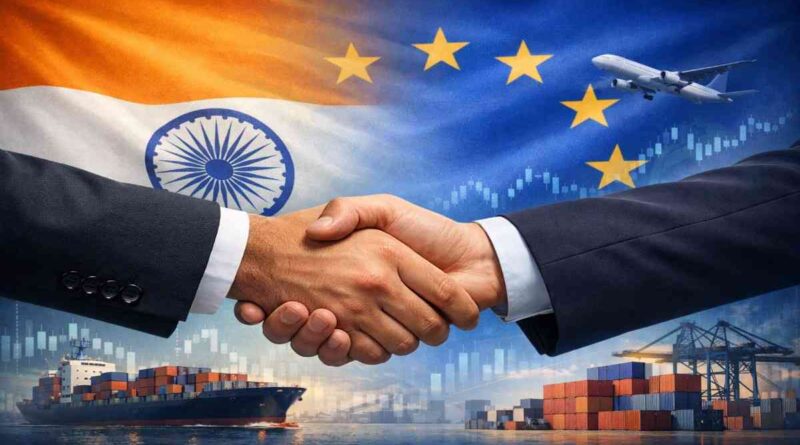
India–EU Trade Deal Finalised: Key Details and Impact on Indian Economy
Latest Update (27 January 2026):
India and the European Union (EU) have officially finalised a landmark Free Trade Agreement (FTA) after nearly two decades of negotiations, Prime Minister Narendra Modi announced during the India–EU summit held in New Delhi on 27 January. The deal covers approximately 25 % of global GDP and one-third of world trade, and is expected to significantly reshape India’s trade and economic landscape.
The India–EU Free Trade Agreement has been one of the most talked-about global economic developments of 2025–26. After years of intermittent talks, high-level diplomatic engagement, and negotiations around sensitive sectors ranging from automobiles to agriculture, both sides confirmed the deal’s conclusion this week.
This article explains the final terms, sector impact, economic implications, and what happens next for businesses, MSMEs, and investors in India.
What Is the India–EU Trade Deal (FTA)?
A Free Trade Agreement (FTA) is an arrangement that aims to reduce or eliminate trade barriers — such as tariffs and complex regulations — between partner economies to promote smoother cross-border exchange of goods and services.
The India–EU FTA is designed to:
- Reduce import tariffs on a wide range of goods
- Expand access for services and digital trade
- Improve market access for exporters
- Strengthen regulatory cooperation and standards
- Increase investment and technology sharing
The EU is one of India’s largest trading partners, and this deal is set to deepen economic ties with a bloc of 27 countries representing a massive consumer and business market.
Key Development: India–EU Trade Deal Officially Finalised
After nearly two decades of negotiations, India and the European Union have officially finalised the Free Trade Agreement (FTA) following high-level talks in New Delhi on 27 January 2026.
The announcement was made after meetings between Prime Minister Narendra Modi and senior EU leadership, marking one of the most significant trade agreements for India in recent years.
The deal is expected to be implemented in phases after formal ratification by both sides, with tariff reductions, regulatory cooperation, and market access commitments rolled out over the next few years.
Key Tariff Changes Under India–EU Trade Deal (Sector-wise)
| Sector / Product | Earlier Tariff (Approx.) | New Tariff (Phased) | Expected Impact |
|---|---|---|---|
| Passenger Cars (EU) | Up to 110% | Down to ~10% over 5 years | Lower car prices, more competition, auto investments |
| Auto Components | 15% – 25% | Gradual elimination | Boost to auto exports and supply chains |
| Wine & Spirits | Around 150% | Cut significantly in phases | Cheaper imported wine, hospitality sector impact |
| Machinery & Equipment | 7.5% – 15% | Reduced or removed | Lower manufacturing costs |
| Textiles & Apparel | Various tariffs | Mostly zero-duty access | Export growth for Indian textile firms |
| Chemicals & Pharma | Moderate duties | Phased reduction | Better EU market access for Indian pharma |
| Agriculture (Sensitive) | Protected items | Mostly protected | Dairy & cereals safeguarded |
Note: Final tariff schedules will be implemented after legal ratification and in multiple phases. According to international media and official statements, most tariff cuts will be implemented gradually over the next five to seven years after formal ratification.
Sector-Wise Impact on India
Automobile Sector – Major Tariff Cuts
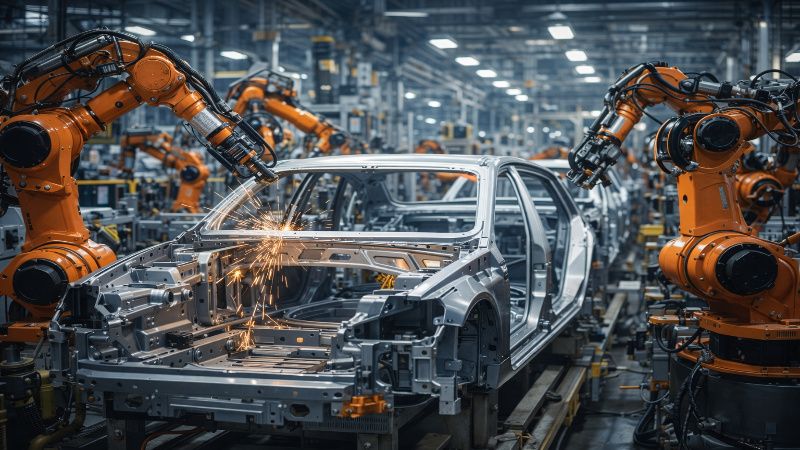
One of the most significant outcomes of the India–EU trade deal is the phased reduction of import duties on European cars. Currently, India imposes tariffs of up to 110% on fully imported vehicles, which are expected to be reduced initially to around 40%, with further cuts planned over the next 5 to 10 years.
This move is expected to:
- Reduce prices of premium European cars in India over time
- Encourage European automakers to invest and expand manufacturing in India
- Strengthen India’s auto component exports to EU markets
- Create jobs across auto manufacturing and supplier industries
At the same time, India is likely to retain policy safeguards for electric vehicles (EVs) and local manufacturing to protect its domestic EV ecosystem and long-term industrial goals.
Overall, while consumers may benefit from lower prices in the long run, the larger impact could come from increased foreign investment, technology transfer, and export growth in the auto supply chain.
Textiles and Apparel
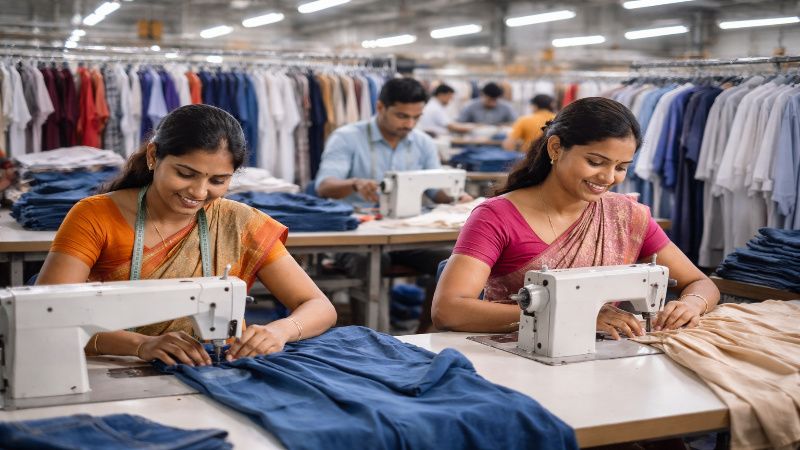
India’s textiles and garments sector, a major employer and export contributor, is expected to benefit from easier access to EU markets and lower trade barriers.
What Changes Under the FTA
- Tariffs on pharmaceutical products (up to ~11%) to be largely removed
- Chemical product duties (up to ~22%) to be reduced or eliminated
- Faster regulatory cooperation for product approvals and inspections
- Improved access for Indian generic medicines in EU healthcare markets
This move is expected to:
- Improve competitiveness of Indian garments in European retail markets
- Increase export orders from EU fashion brands and buyers
- Support expansion of textile manufacturing clusters
- Create employment across stitching, processing, and logistics segments
Overall, better market access combined with export incentives can strengthen India’s position as a global sourcing hub for apparel.
This links to government priorities around boosting exports through policy action such as Budget 2026 expectations for MSMEs and export growth.
Pharmaceuticals and Chemicals
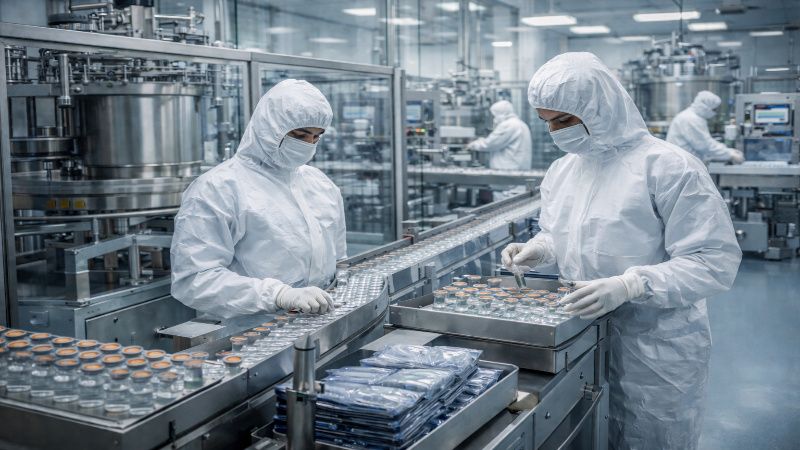
The EU is one of the world’s largest pharmaceutical markets, and improved trade terms could enhance India’s already strong presence in generic medicines and chemical exports.
What Changes Under the FTA
- Tariffs on pharmaceutical products (up to ~11%) to be largely removed
- Chemical product duties (up to ~22%) to be reduced or eliminated
- Faster regulatory cooperation for product approvals and inspections
- Improved access for Indian generic medicines in EU healthcare markets
This move is expected to:
- Boost exports of affordable generic drugs to European countries
- Support API (active pharmaceutical ingredient) manufacturing in India
- Improve collaboration in research and quality standards
- Increase chemical exports used in industrial and medical sectors
While compliance with EU regulations remains strict, long-term access to high-value markets can improve revenue stability for Indian pharma firms.
Electronics and Engineering Goods
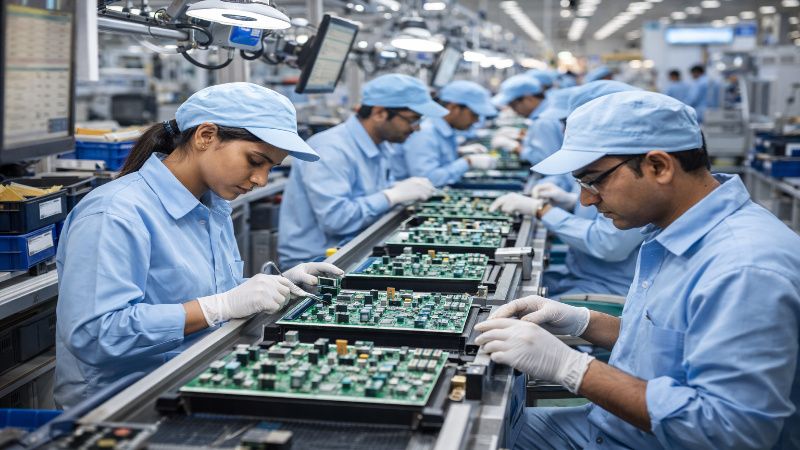
Under the India–EU Free Trade Agreement, major tariff and market-access changes are expected for engineering and electronics products:
- Import duties on EU machinery (up to ~44%) to be largely eliminated over phased timelines, making advanced equipment cheaper for Indian factories
- Tariffs on electrical and electronic components to be reduced or removed, lowering input costs for electronics manufacturing in India
- Zero or near-zero duty access for many Indian engineering exports to the EU, improving price competitiveness in European markets
- Faster customs clearance and regulatory cooperation, helping reduce delays for industrial shipments
- Stronger participation of Indian suppliers in EU manufacturing supply chains, especially in auto parts, industrial tools, and electrical equipment
Expected Impact on Industry
- Lower production costs due to cheaper imported machinery
- Increased exports of engineering goods to Europe
- Higher foreign investment in Indian manufacturing clusters
- Technology transfer and productivity improvement
This supports government goals under Make in India and PLI schemes to move India up the global manufacturing value chain.
Agriculture and Food Products
Agri-exports and food processing could see improved access to European markets under lower tariffs and faster customs procedures.
What Changes Under the FTA
- Tariffs on processed agricultural products (up to ~50%) to be phased out
- Indian duties on olive oil to fall from ~45% to 0% over five years
- Import duty on European wines to drop from ~150% to 75% initially, and later to ~20%
- Improved access for Indian food exports like rice products, spices, and marine items to EU
This move is expected to:
- Increase exports of processed foods, spices, and agri-based products
- Support value-added farming and food processing industries
- Improve income opportunities for export-oriented farmers
- Encourage investment in cold storage and logistics infrastructure
Strict EU food safety standards will remain, so quality compliance will be key for sustained growth.
Economic and Market Implications of the Deal
What Changes After the FTA
- Tariff elimination on over 96% of EU goods traded with India
- Import duties on cars cut from up to 110% to around 40% initially, with further reductions later
- Machinery and industrial equipment duties (up to 44%) to be mostly removed
- Pharma and chemicals tariffs (up to 11%–22%) to be reduced
- EU exporters expected to save around €4–5 billion per year in duties
Market and Economy Impact
- Higher export volumes for Indian manufacturers
- Better capacity utilisation in factories
- Improved investor confidence in export-oriented sectors
- Medium-term support to GDP growth and industrial output
Overall, the deal strengthens India’s integration into European supply chains and improves long-term trade stability.
Impact on MSMEs and Employment in India
What Changes for MSMEs
- Easier access to EU markets due to tariff removal
- Lower cost of imported machinery and components
- More subcontracting opportunities from large exporters
- Entry into EU-linked supply chains in textiles, auto parts and food processing
Employment Impact
- Expansion of manufacturing clusters
- Higher demand for skilled and semi-skilled labour
- Growth in logistics, warehousing and packaging services
- Job creation in export-oriented regions
Key Challenge
- MSMEs may need support for:
- Meeting EU quality and safety standards
- Certification and compliance costs
- Technology and productivity upgrades
With adequate credit access and skill development support, MSMEs could become one of the biggest long-term beneficiaries of the India–EU trade agreement.
Challenges and Risks for India
While the India–EU FTA creates strong export opportunities, it also brings certain risks that policymakers and industries must manage carefully.
Increased Competition from European Imports
- European companies may gain easier access to Indian markets
- Domestic producers in sectors like:
- Automobiles
- Dairy products
- Wines and spirits
- High-end manufacturing
may face pressure on prices and market share
- Smaller firms may struggle to compete with established EU brands
Compliance with EU Standards
- EU markets require strict compliance with:
- Quality standards
- Environmental regulations
- Product safety norms
- MSMEs may face:
- Higher certification costs
- Investment needs for technology upgrades
- Delays in meeting regulatory requirements
Without financial and technical support, many small exporters may not fully benefit from tariff reductions.
Risk of Trade Imbalance in Initial Years
- EU exports to India may rise faster than Indian exports initially
- This could widen India’s trade deficit in the short term
- Export growth depends on:
- Production capacity
- Infrastructure readiness
- Faster customs clearance
Implementation and Infrastructure Challenges
- Effective execution requires coordination between:
- Central and state governments
- Customs authorities
- Industry bodies
- Delays in:
- Logistics
- Port handling
- Regulatory approvals
could reduce the practical benefits of tariff cuts
Need for Strong Policy Support
To ensure balanced gains from the agreement, India will need:
- Easier access to export credit
- Technology upgradation schemes
- Skill development programs
- Export facilitation and market access support
Without these, the benefits of the trade deal may remain concentrated among large exporters rather than being widely distributed.
Conclusion
The India–EU trade agreement is a major step toward strengthening India’s global trade partnerships and expanding export opportunities. If implemented effectively, it can support industrial growth, improve market access for exporters, and create employment across manufacturing and allied sectors. However, timely policy support and strong infrastructure will be crucial to ensure that the benefits of the deal reach businesses of all sizes and contribute to sustainable economic growth.
Sources & References
The following international media reports provide additional confirmation and details of the India–EU trade agreement announcement:
- Reuters — India and EU finalise landmark trade deal after high-level talks
- European Commission — EU and India conclude landmark Free Trade Agreement
Disclaimer
This article is for educational and informational purposes only and does not constitute financial or investment advice. Trade policies and economic outcomes may change based on final agreements and government decisions.

Pingback: Impact of AI on Jobs in India 2026: Opportunities and Risks
Pingback: Union Budget 2026: Key Highlights & Impact on Indian Economy