
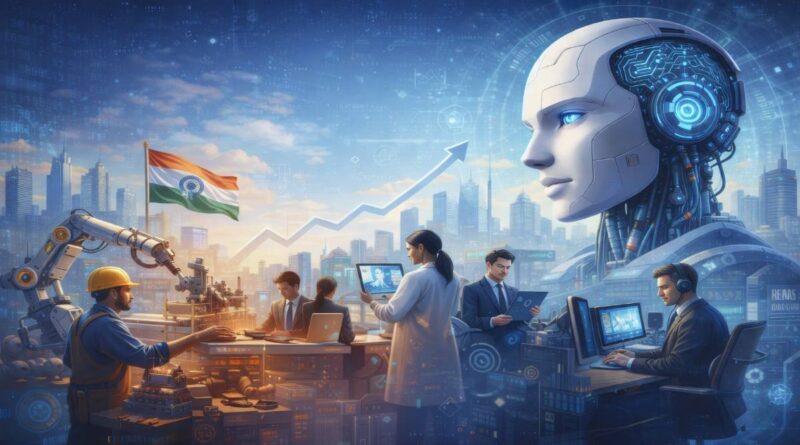
Impact of AI on Jobs in India: Opportunities and Risks Explained
Artificial Intelligence (AI) is rapidly changing the way businesses operate in India. From banks and hospitals to factories and online stores, AI tools are now helping companies work faster, reduce costs, and make better decisions. While this technological shift is creating new career opportunities, it is also reducing demand for some traditional job roles.
For India, where millions of young people enter the workforce every year, understanding how AI will shape employment is extremely important.
What Is Artificial Intelligence and Why It Matters for Jobs
Artificial Intelligence refers to computer systems that can perform tasks normally done by humans, such as:
- Analysing large amounts of data
- Recognising speech and images
- Answering customer queries
- Predicting outcomes based on patterns
Earlier, such tasks required large human teams. Now, AI can handle many of these functions automatically, which means:
- Companies need fewer people for routine tasks
- New technical roles are created to build and manage AI systems
- Job profiles are shifting from manual work to skill-based work
This is why AI has a direct and strong impact on employment.
Why AI Adoption Is Growing Rapidly in India
India is becoming a major hub for AI adoption due to several structural advantages, according to recent NASSCOM industry report on AI adoption in India.
- Strong IT and software services industry
- Growing number of AI startups and digital platforms
- Rapid digitalisation of banking, retail and government services
- Availability of cloud computing at lower cost
- Government focus on digital economy and innovation
Many Indian companies are using AI not only to reduce costs, but also to improve customer experience and productivity, which is accelerating its adoption across sectors.
Sector-Wise AI Impact on Jobs in India (Quick Overview)
| Sector | Job Creation Potential | Job Risk Level |
|---|---|---|
| IT & Software | High | Low |
| Healthcare | High | Low |
| Manufacturing | Medium | High |
| Banking & Finance | Medium | Medium |
| Retail & BPO | Low | High |
| Education & Training | Medium | Low |
This shows that AI does not affect all industries in the same way. Some sectors gain jobs, while others face higher automation risk.
Sectors Where AI Will Create New Jobs
AI is generating strong employment opportunities in skilled and specialised roles.
Information Technology and Data Services

- AI engineers and developers
- Data analysts and machine learning experts
- Cybersecurity professionals
- Cloud infrastructure specialists
Healthcare and Medical Technology

- Medical data analysts
- AI-based diagnostic support staff
- Health technology system managers
Manufacturing and Industrial Automation
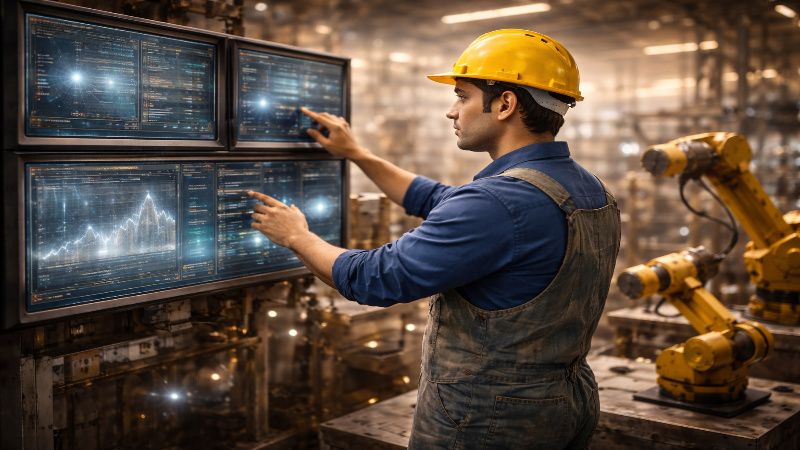
- Robotics maintenance engineers
- Smart factory technicians
- Process optimisation specialists
Digital Marketing and Business Analytics
- Performance marketing analysts
- Customer behaviour data specialists
- AI-based content and growth strategists
These roles require technical training, but they also offer higher salaries and long-term growth.
Sectors Most at Risk from Automation
Jobs that follow fixed procedures and repetitive tasks are more vulnerable to automation.
High-Risk Job Areas
- Data entry and back-office processing
- Basic customer support and call centres
- Factory assembly line workers
- Routine accounting and billing tasks
- Retail checkout and inventory roles
AI systems and machines can perform these tasks faster and at lower cost, which may reduce hiring in these segments over time.
Impact of AI on Small Businesses and MSMEs
AI is not only affecting large companies; it is also transforming small businesses.
How MSMEs Are Using AI
- Automated billing and accounting tools
- AI-based marketing and customer targeting
- Chatbots for online customer service
- Demand forecasting and inventory planning
This helps small businesses compete with larger companies, but it also reduces the need for some manual roles, especially in clerical and support functions.
Impact on Freshers and Entry-Level Jobs
Fresh graduates may face new challenges in the job market:
- Fewer openings for routine office work
- Higher demand for technical and analytical skills
- Companies preferring multi-skilled candidates
However, freshers who develop skills in:
- Data tools
- Digital marketing
- AI-assisted business operations
- Coding and automation
will find better employment opportunities in emerging roles.
How AI Will Change Salary Levels and Skill Demand
AI is increasing income gaps between skilled and unskilled workers.
Higher Salary Growth For
- AI developers and data professionals
- Cybersecurity and cloud experts
- Product managers with tech knowledge
India’s increasing focus on technology partnerships and global trade is also supporting demand for these high-skill roles.
Slower Salary Growth For
- Clerical and administrative staff
- Basic service sector roles
- Manual factory workers
In future, income will depend more on skills and adaptability rather than years of experience alone. This shift is also being shaped by government policies and budget priorities that focus on digital and technology-driven growth.
What Government and Companies Are Doing to Manage AI Impact
Government Actions
- Skill development programs for digital jobs
- Support for AI research and startups
- Promotion of online education platforms
- Focus on digital infrastructure
Corporate Strategies
- Employee upskilling programs
- Internal AI training initiatives
- Redesign of job roles instead of layoffs
The overall focus is shifting towards retraining workers instead of replacing them completely.
How Workers Can Prepare for the AI-Driven Job Market
To remain relevant, workers must continuously update their skills.
Practical Steps
- Learn basic data and digital tools
- Enrol in online AI and technology courses
- Improve analytical and problem-solving abilities
- Develop communication and decision-making skills
- Stay updated with industry trends
Workers who combine technical knowledge with business understanding will be in high demand.
Conclusion
Artificial Intelligence will not completely eliminate jobs in India, but it will significantly change how people work and what skills are required. While automation may reduce some low-skill roles, AI will also create new employment opportunities in technology, healthcare, education, and digital services.
The key challenge for India will be managing the skill gap and ensuring that workers are prepared for new types of jobs. Those who invest in learning and adaptability will benefit most from the AI-driven economy.
FAQs
Will AI replace jobs in India?
AI will replace some routine jobs, but it will also create new roles that require technical, creative, and analytical skills. Overall, job profiles will change rather than disappear completely.
Which jobs are safest from AI automation?
Jobs that require human judgment, creativity, emotional intelligence, and leadership — such as teaching, healthcare, management, and creative professions — are less likely to be fully automated.
Will AI increase unemployment in India?
Some short-term job displacement is possible, but long-term employment depends on how effectively workers are trained for new AI-related roles.
What skills are needed for AI-era jobs?
Important skills include data literacy, digital tools, problem-solving, communication skills, adaptability, and basic understanding of AI systems.

Pingback: How Tata Group Expanded Globally: Strategy Behind India’s Business Empire