
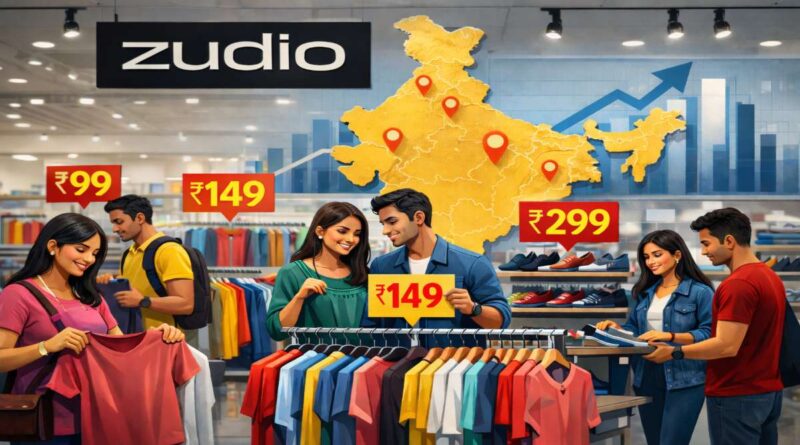
How Zudio Disrupted India’s Affordable Fashion Market
India’s fashion retail industry has witnessed a dramatic transformation over the past decade. Rapid urbanization, rising disposable income, and growing fashion awareness among young consumers have reshaped how Indians buy clothing. While premium international brands such as Zara and H&M attracted attention in metropolitan markets, a massive segment of Indian consumers remained underserved.
This gap created an opportunity for value driven fashion retailers. Among them, Zudio has emerged as one of the most successful disruptors in the Indian affordable fashion industry.
Launched in 2016 by Trent Limited, a Tata Group retail company, Zudio has quickly grown into one of the fastest expanding fashion retail chains in India. By combining extremely affordable pricing, efficient supply chains, and aggressive store expansion across emerging cities, Zudio has fundamentally reshaped the competitive landscape of India’s fashion market.
Today the brand represents a powerful case study of how a deep understanding of consumer demand can create disruption even in a highly competitive industry.
Understanding the Gap in India’s Fashion Market
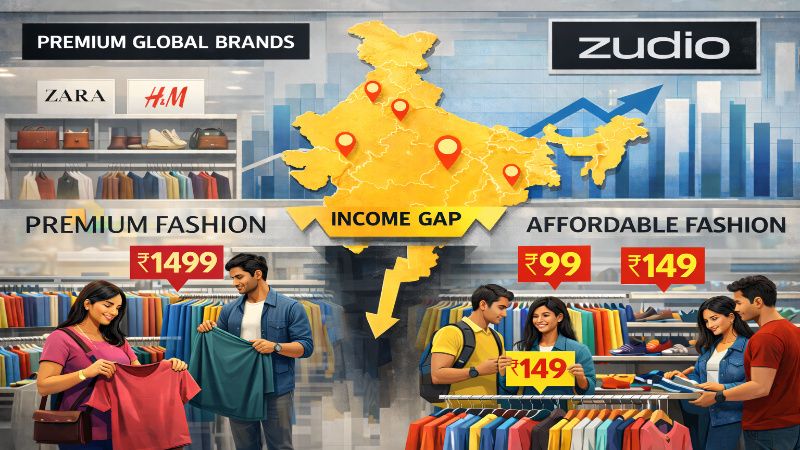
Before Zudio entered the market, India’s fashion retail ecosystem had a clear structural imbalance.
On one side were premium global fashion retailers that catered primarily to urban consumers with relatively high purchasing power. These brands offered trend driven fashion but their price points placed them out of reach for a large portion of the Indian population.
On the other side was the unorganized apparel market which included local garment shops and street vendors. While these outlets offered cheaper clothing, consumers often faced issues related to inconsistent quality, limited product variety, and a lack of modern retail experience.
Between these two segments existed a massive underserved opportunity. Millions of middle income consumers wanted fashionable clothing that was affordable, reliable, and easily accessible.
Zudio was designed precisely to address this gap. The brand positioned itself as a value fashion retailer offering stylish clothing at prices that remain accessible to the mass market.
The Rise of Zudio and Its Rapid Expansion
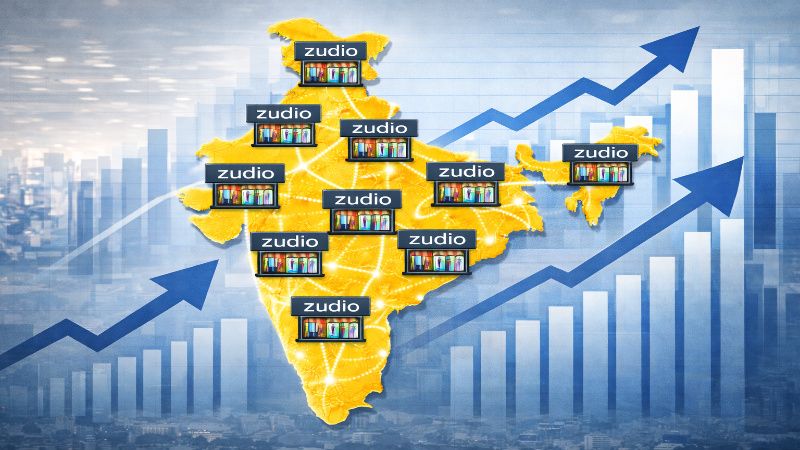
Zudio began as a small retail experiment within Tata’s broader retail ecosystem. Initially it operated as a clothing section inside Star Bazaar supermarkets before evolving into a standalone retail format.
The brand opened its first independent store in Bengaluru in 2016. Since then its growth trajectory has been remarkable.
Within a few years Zudio expanded to hundreds of stores across India. The company rapidly increased its presence across both large metropolitan areas and smaller cities, creating one of the fastest growing fashion retail networks in the country.
This rapid expansion has significantly contributed to the growth of Trent Limited which also operates fashion brands such as Westside and Utsa. In recent years Zudio has become one of the primary growth engines for the company.
The scale of expansion demonstrates how effectively the brand has tapped into India’s value conscious consumer segment.
The Business Strategy Behind Zudio’s Success
Zudio’s disruption of the affordable fashion market is rooted in a distinct business model focused on efficiency, scale, and cost control.
1. Ultra-Affordable Pricing Strategy
The most visible part of Zudio’s strategy is its extremely competitive pricing.
Many Zudio products fall into price ranges such as:
- ₹199 – ₹299 T-shirts
- ₹499 – ₹799 dresses
- Budget footwear and accessories
By maintaining such price points, the brand targets:
- Students
- Young professionals
- Middle-income families
This pricing strategy creates a high-volume sales model, where profitability comes from scale rather than high margins.
2. Smart Real Estate Strategy
Unlike many fashion retailers that focus on expensive malls, Zudio frequently opens stores in:
- Tier-2 and Tier-3 cities
- Suburban neighborhoods
- Standalone retail locations
Lower rental costs allow the company to maintain low product prices while preserving margins.
This also enables the brand to reach consumers in cities where international brands have limited presence.
3. Rapid Store Expansion Model
Zudio uses a Franchise-Owned, Company-Operated (FOCO) model for many of its outlets.
Under this system:
- Franchise partners invest in store infrastructure
- Zudio manages store operations and brand standards
This model significantly reduces capital risk while enabling rapid expansion across the country.
4. In-House Design and Supply Chain Control
Another critical factor behind Zudio’s success is its tight control over design and sourcing.
India’s textile and apparel supply chain has also been supported by government initiatives aimed at strengthening domestic manufacturing, such as the Production Linked Incentive scheme.
Instead of relying heavily on external brands, the company:
- Designs products internally
- Works with cost-efficient suppliers
- Controls production cycles
This ensures the brand can deliver trend-driven fashion at very low prices while maintaining consistent quality.
5. Minimal Marketing Costs
Unlike many fashion brands that rely heavily on advertising campaigns, Zudio spends relatively little on marketing.
Instead, the brand benefits from:
- High footfall locations
- Word-of-mouth promotion
- Organic social media visibility
Lower marketing costs translate into lower product prices for consumers.
The Power of Tier Two and Tier Three Markets

One of Zudio’s most powerful strategic moves has been its focus on smaller cities and emerging markets.
India’s consumption growth is increasingly driven by:
- Rising incomes in smaller cities
- Expanding middle-class population
- Increasing exposure to fashion trends via social media
Recognizing this shift early, Zudio prioritized store openings outside metropolitan areas.
Recent industry reports indicate that most new Zudio stores are now opening in smaller towns and emerging urban markets.
This strategy allowed the brand to capture markets that were largely ignored by premium fashion retailers.
Impact on the Indian Fashion Retail Industry
Zudio’s rapid growth has forced other fashion retailers to rethink their strategies in the value fashion segment.
Several large retail companies have responded by launching new affordable fashion formats or expanding existing value focused brands.
Reliance Retail introduced youth focused value fashion stores.
Aditya Birla Fashion strengthened its presence in affordable apparel retail.
Regional retailers began expanding store networks across emerging cities.
As competition increases the organized affordable fashion market in India continues to expand rapidly.
Zudio’s success has effectively demonstrated that value driven fashion retail can scale across the country when supported by efficient operations and strong market positioning.
Changing Consumer Behavior in the Fashion Market
Zudio’s popularity also reflects broader changes in consumer behavior across India.
Modern consumers increasingly prefer affordable clothing that allows them to update their wardrobe frequently. Fashion is no longer seen as a seasonal purchase but as a continuous lifestyle choice.
Young shoppers in particular seek trendy styles at accessible price points.
Zudio caters to this demand by offering regularly refreshed collections and attractive pricing that encourages repeat visits.
In many ways the brand has brought the fast fashion concept to India’s mass market audience.
Future Challenges and Opportunities
Despite its rapid success, Zudio faces several future challenges.
These include:
- Increasing competition from domestic retailers
- Rising supply chain costs
- Changing consumer preferences
However, the brand also has strong advantages:
- Tata Group backing
- A scalable retail model
- Strong presence in emerging markets
With continued expansion and operational efficiency, Zudio is likely to remain a major force in India’s value fashion sector.
Conclusion
The rise of Zudio represents one of the most interesting retail success stories in modern India.
By identifying a large gap between premium fashion brands and unorganized apparel markets, the company created a compelling value proposition that resonates with millions of consumers. Through affordable pricing, efficient supply chains, strategic store expansion, and strong understanding of consumer behavior, Zudio has successfully disrupted India’s affordable fashion market. As India’s middle class continues to grow and fashion consumption expands across emerging cities, brands that combine accessibility, affordability, and scale will define the next phase of retail growth.
Zudio’s journey shows that in a diverse market like India, true disruption often comes from making quality fashion accessible to everyone.
Frequently Asked Question
Who owns Zudio in India
Zudio is owned by Trent Limited, a retail company that is part of the Tata Group. Trent operates several fashion brands including Westside, Utsa, and Zudio. The brand focuses on providing stylish and affordable clothing for value conscious consumers across India.
When was Zudio launched in India
Zudio was launched in 2016 by Trent Limited. The brand started as a value fashion retail concept and quickly expanded across multiple Indian cities due to strong demand for affordable fashion.
Why are Zudio clothes so affordable
Zudio keeps its prices low through efficient supply chain management, large scale production, minimal marketing expenses, and strategic store locations that reduce rental costs. The brand focuses on high volume sales rather than high profit margins.
How many Zudio stores are there in India
Zudio has rapidly expanded its retail network and operates hundreds of stores across India. The brand continues to open new outlets every year as part of its aggressive expansion strategy.
What is the business model of Zudio
Zudio follows a value fashion retail model focused on affordable pricing, large scale store expansion, efficient sourcing, and in house product design. The company generates revenue through high volume sales and strong customer footfall.
Who are Zudio’s main competitors in India
Zudio competes with several affordable fashion retailers including Reliance Retail fashion brands, Pantaloons, and value focused apparel chains operated by Aditya Birla Fashion and Retail.
Why is Zudio expanding in smaller cities
Zudio targets tier two and tier three cities because these markets have rising middle class consumption and relatively limited organized fashion retail options. Expanding into these regions allows the brand to capture new customers and grow rapidly.
