
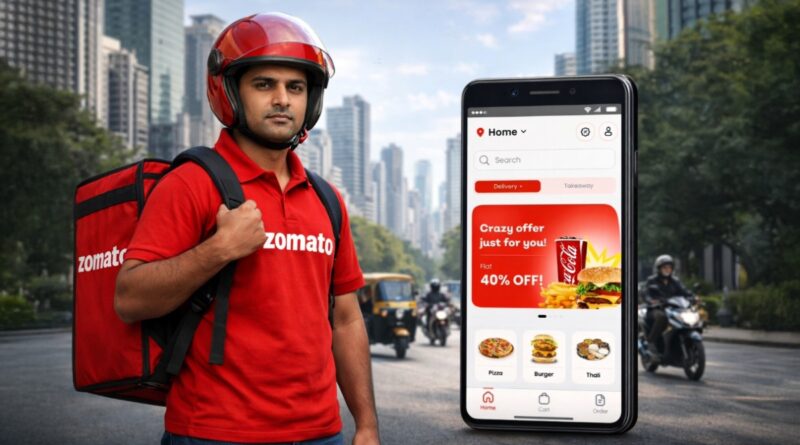
How Zomato, Swiggy & Uber Built India’s Gig Economy | Business Model Explained
India’s gig economy did not grow quietly, it scaled at internet speed.
Behind millions of daily food deliveries and cab rides is a business model that fundamentally changed how labour is organised, priced, and managed in urban India.
Platforms like Zomato, Swiggy, and Uber didn’t just solve logistics problems. They engineered digital labour markets, where algorithms replaced managers and flexibility replaced job security.
This article explains how they did it and why the model is now under pressure.
From Jobs to Tasks: The Structural Shift
Traditional businesses hire employees.
Gig platforms unbundle work into tasks, one delivery, one ride, one pickup.
This shift allowed platforms to:
- Avoid fixed payroll costs
- Scale supply instantly
- Expand city-by-city with minimal assets
Labour became on-demand infrastructure, coordinated entirely through software.
Platform Economics: How the Gig Business Model Works
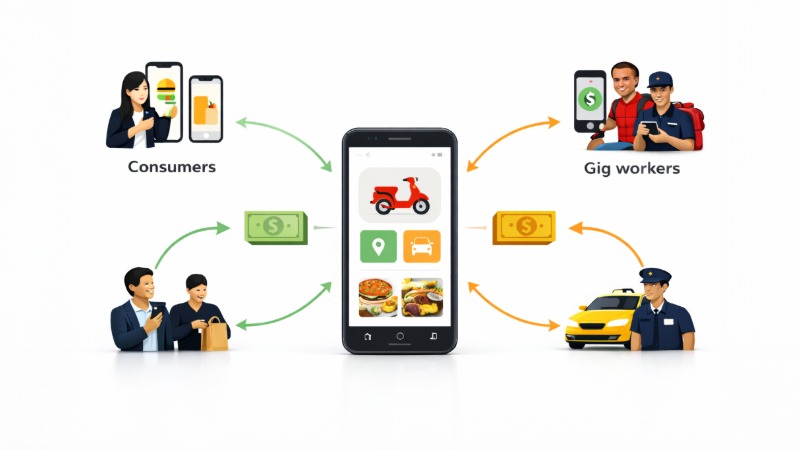
These companies operate two-sided marketplaces:
- Demand side: consumers seeking speed, convenience, low prices
- Supply side: gig workers seeking flexible income
The platform controls:
- Pricing logic
- Task allocation
- Incentives
- Ratings and penalties
Owning demand and data not vehicles or workers made the model scalable across India.
The Real Cost Structure Behind Every Order
Every Rs 300 food order looks simple. The business math isn’t.
Major cost components
- Gig worker payouts (largest expense)
- Incentives & surge bonuses
- Customer discounts
- Technology & cloud infrastructure
- Marketing and brand acquisition
Worker payouts alone can account for 60–70% of gross order value in food delivery.
From a business lens, gig labour is a variable cost.
From a worker lens, income becomes volatile and uncertain.
Why India Was the Ideal Market
Three structural factors made India perfect:
1. Informal Labour Base
Millions were already accustomed to flexible, non-contract work.
2. Smartphones + Digital Payments
Cheap data and instant payouts enabled real-time coordination,supported by India rapid growth in digital payments.
3. Dense Urban Demand
High order density lowered per-task costs and improved efficiency.
Scale came fast, but dependency on gig labour grew even faster.
Algorithms as Managers
These platforms don’t use supervisors.
They use code.
Algorithms decide:
- Who gets work
- How much they earn
- Who qualifies for incentives
- Who faces penalties or deactivation
This reduces overhead and enables scale but creates opacity and trust issues for workers.
Why Profitability Remains Elusive
High scale is not equal to high margins.
- Food delivery: low ticket size, high fulfilment cost
- Ride-hailing: fuel sensitivity, supply shortages, price caps
Most platforms operate on single-digit contribution margins, leaving little room for shocks like regulation, strikes, or fuel hikes.
The Pressure Point Today
The model now faces simultaneous stress from:
- Rising worker demands
- Policy and social security debates
- Investor push for profitability
- Consumer resistance to price hikes
The gig structure that powered growth is now being tested for sustainability.
Conclusion: A Model That Rewired India’s Labour Market
Zomato, Swiggy, and Uber didn’t just disrupt industries they reshaped urban employment.
From a business perspective, the gig economy is an elegant platform design.
From a long-term lens, it is still an unfinished experiment.
FAQs
1. Is the gig economy profitable for companies like Zomato, Swiggy, and Uber?
Not consistently. Despite large scale, high fulfilment costs, worker incentives, discounts, and operational expenses keep margins thin. Most platforms still focus on efficiency and scale rather than stable long-term profitability.
2. Why do gig platforms rely on independent workers instead of full-time employees?
Using independent gig workers converts labour into a variable cost. This allows platforms to scale quickly without fixed payroll obligations, while shifting demand risk from the company to the worker.
3. What role do algorithms play in the gig economy?
Algorithms function as managers by controlling task allocation, pricing, incentives, ratings, and penalties. This enables rapid scaling but often creates transparency and trust issues for gig workers.
4. Is India’s gig economy sustainable in the long term?
Sustainability depends on balancing platform profitability, worker protections, and consumer pricing. Rising regulatory scrutiny and worker demands suggest the current model will need structural adjustments.
Disclaimer
This article is for informational and educational purposes only. It does not constitute investment, legal, or employment advice. The views expressed are based on publicly available information and analysis.

Pingback: Budget 2026 Expectations: What Middle Class & MSMEs Want